Understanding: The Coordinated Mask Narrative and the Machinery of Global Control
I don't claim to know anything for sure, other than stuff stinks to high heaven.

In the initial phase of the COVID-19 pandemic, I accepted the dominant narrative surrounding the use of masks as a protective public health measure. I followed commentators like Dr. John Campbell and Chris Martenson, both of whom presented themselves as analytically minded and evidence-driven. Their discussions were bolstered by emerging journal articles, institutional guidance, and epidemiological models that gave the appearance of scientific consensus. In that early period, the case for masking seemed persuasive.
At the same time, I encountered dissenting views. These included perspectives from physicists, doctors, industrial hygienists, and engineers familiar with filtration technologies—people who had relevant domain-specific expertise not typically centered in virological discourse. Among them was Denis Rancourt, a contrarian voice but one whose arguments were grounded in physics and occupational safety principles. Other dissenters questioned the logic of community masking, cited conflicting evidence on airborne transmission, and raised alarms about the political and symbolic role that masks had begun to assume. Though I read their work, I initially assumed the mainstream view must be better supported. I considered the dissenting positions likely flawed—perhaps misinformed, or perhaps failing to account for the real-world complexities of disease spread.
Still, even in those early months, there was a persistent difficulty in reconciling contradictory sources of information. A friend slapped me upside the head and said I was being naive about the malevolence of the deep state, and should know better. Yep!
Guidance changed rapidly and often without clear justification. The level of scientific uncertainty was downplayed in public communication. Public health claims were treated as definitive, even when they were based on preliminary data or modeled projections. I continued to examine studies and statements on both sides, but found it increasingly difficult to determine what counted as reliable evidence. Over time, that difficulty became a central issue—not just in the question of masking, but in the entire apparatus of pandemic response.
Eventually, it became clear that the masking debate was not an isolated matter of scientific disagreement. Rather, it was part of a broader set of policies and social pressures that exhibited striking patterns of coordination, uniformity, and rhetorical rigidity across institutions and nations. What had appeared to be public health policy began to resemble something else: a tightly synchronized set of measures deployed globally, accompanied by aggressive narrative control, suppression of dissent, and an abandonment of ordinary standards of transparency.
At that point, my view shifted. I no longer regarded these developments as the chaotic byproducts of an unprecedented emergency. Instead, I came to favor the view that the pandemic response represented a coordinated worldwide effort of control—one that cannot be explained solely by fear, error, or institutional inertia. The coordination was not just visible in policy but in timing, messaging, censorship practices, and the consistent marginalization of divergent viewpoints, even when those views were expressed by credentialed scientists and experts.
The effects of this coordination are clear: the widespread restriction of movement, the expansion of state and corporate surveillance, the imposition of novel behavioral norms, and the centralization of authority under emergency frameworks. These outcomes are not speculative—they are empirical facts. What remains unclear are the motives behind these efforts. The range of proposed motives is wide: public health protection, psychological conditioning, geopolitical maneuvering, economic restructuring, digital identity integration, or more obscure ideological goals. These hypotheses remain underdetermined by available evidence. However, they cannot be dismissed out of hand.
Although I do not claim definitive knowledge of who orchestrated these events or for what purpose, I do hold that the circumstantial and direct evidence supports at least the reasonable suspicion that there was something nefarious at work. This is not a conclusion drawn from a single source or theory but from lines of evidence reasoning—the kind used in legal, investigative, and scientific settings when multiple strands of data, pattern, and behavior collectively imply a causal structure not attributable to chance or coincidence.
Some of the evidence is circumstantial, as is often the case in complex, multi-actor phenomena. But some is not. Internal government documents, statements from officials later retracted or contradicted, whistleblower accounts, and the retrospective analysis of predictive exercises and policy rehearsals suggest deliberate planning or foreknowledge in key areas. The synchronization of messaging across media platforms, the near-universal suppression of dissenting medical opinion, and the consistent avoidance of open debate are not features of an open scientific society responding to uncertainty—they are features of centrally managed narrative enforcement.
I do not claim to know the whole story. Indeed, part of the problem is that the real story may be hidden in plain sight, obscured by an overabundance of noise, misinformation, and decoy theories. The proliferation of conflicting accounts—some outlandish, others plausible but unverifiable—may itself be part of the operational landscape. The uncertainty this creates is not accidental; it serves to discredit legitimate investigation by association.
In sum, my early acceptance of the mask narrative was based on a good-faith reading of apparently credible sources. My subsequent skepticism was not born of ideology or reflexive opposition but emerged through continued examination, failed reconciliation of opposing claims, and the recognition of larger patterns of behavior that cannot be explained by accident or incompetence alone. My current view is that the COVID-19 event, including its masking component, was part of a coordinated global operation. Its outcomes are evident. Its actors are partially knowable. Its motives remain uncertain. But the pattern is there. And the effort to obscure it—often by rhetorical means—is itself part of the evidence.
Annotated Readings List: Scientific and Scholarly Critiques of the COVID-19 Narrative
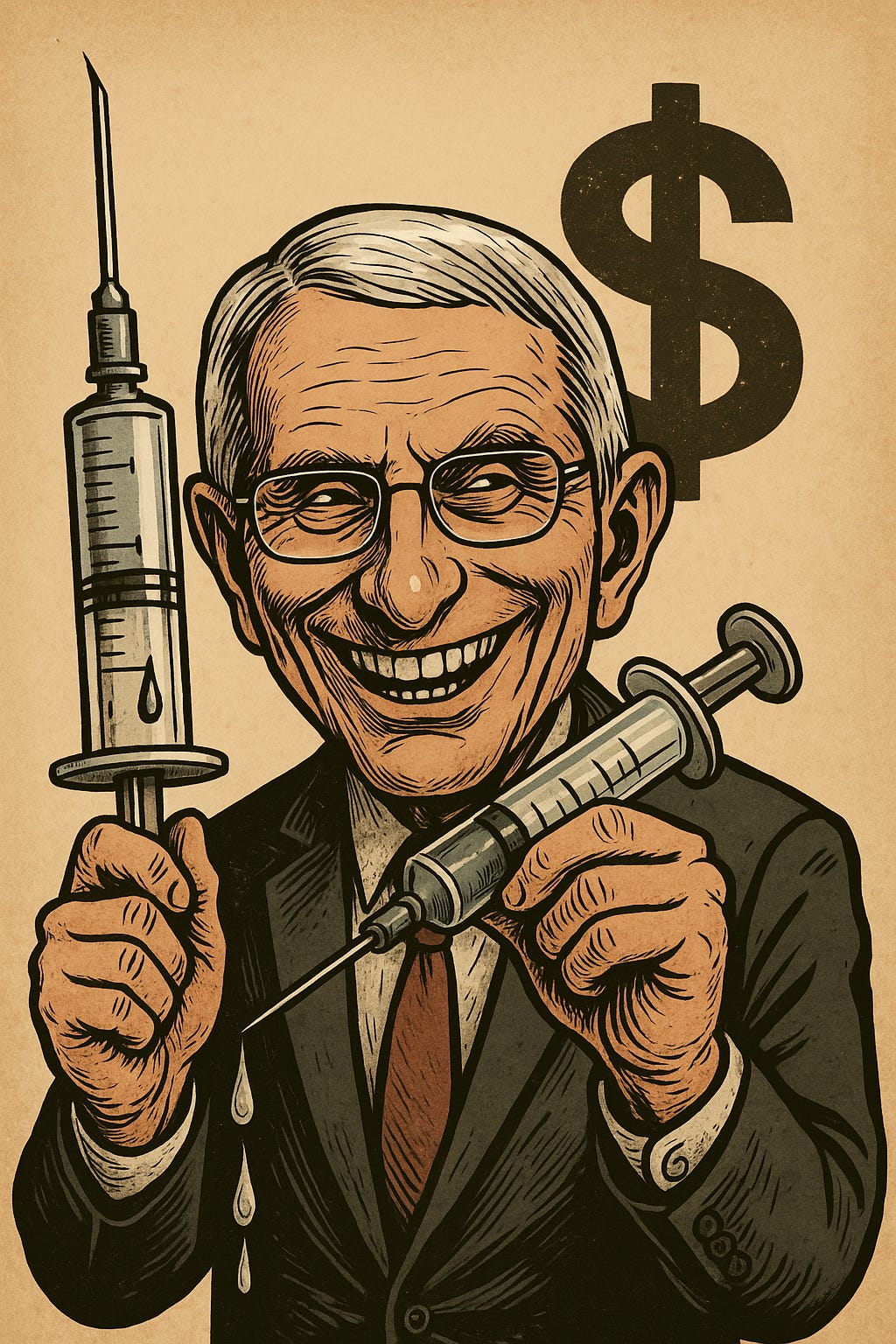
1. Kennedy, R. F. Jr. (2021). The Real Anthony Fauci: Bill Gates, Big Pharma, and the Global War on Democracy and Public Health. Skyhorse Publishing.
A central text in the post-2020 critical literature. Kennedy lays out a sweeping indictment of Anthony Fauci’s role in shaping pandemic policy, particularly the relationship between U.S. health agencies, pharmaceutical firms, and global health authorities like the WHO. While polemical, the book cites a substantial number of peer-reviewed studies, government documents, and financial disclosures to support claims of systemic corruption, suppression of alternative treatments, and coerced compliance. Suitable as an entry point into the institutional critique of pandemic governance.
2. Malone, R. (2023). Lies My Gov’t Told Me: And the Better Future Coming. Skyhorse Publishing.
Co-authored by one of the originators of mRNA vaccine technology, this work explores how the U.S. government, media, and health institutions managed the narrative around COVID-19 and vaccinations. Malone argues that censorship, psychological operations, and propaganda—not science—drove many policies. The book interweaves first-person experience with public domain evidence, offering insight into scientific dissent from inside the biomedical establishment.
3. McCullough, P. A., Alexander, P. E., & Risch, H. A. (Eds.). (2022). The Courage to Face COVID-19: Preventing Hospitalization and Death While Battling the Bio-Pharmaceutical Complex. Counterplay Press.
Dr. Peter McCullough, a practicing internist and cardiologist, critiques the systemic suppression of early outpatient treatments for COVID-19. This book addresses the consequences of centralized decision-making, regulatory capture, and the marginalization of clinical judgment. While not a technical monograph, it compiles medical and policy reasoning for alternative approaches, supported by clinical trial citations.
4. Bhattacharya, J., Kulldorff, M., & Gupta, S. (2020). The Great Barrington Declaration.
A scientifically grounded argument against broad lockdowns, advocating instead for "focused protection" of vulnerable populations. Authored by professors from Harvard, Stanford, and Oxford, the declaration is supported by empirical reasoning and population health data. The authors have been vocal about political suppression and reputational attacks despite their academic standing.
URL: https://gbdeclaration.org/
5. Rancourt, D. (2020–2022). Collection of technical reports and white papers on masks, mortality data, and public policy.
Physicist Denis Rancourt has published several technical assessments arguing that mask mandates and lockdowns lack evidentiary support and have contributed to excess mortality. Though not peer-reviewed in the conventional sense, his reports are analytically rigorous and cite publicly available data sets.
URL: https://denisrancourt.ca
6. Ioannidis, J. P. A. (2020). The infection fatality rate of COVID-19 inferred from seroprevalence data. Bulletin of the World Health Organization, 99(1), 19–33F.
An early and methodologically cautious critique of COVID-19 fatality estimates and policy overreaction. Ioannidis, a central figure in evidence-based medicine, emphasizes proportionality and methodological transparency.
7. Kheriaty, A. (2022). The New Abnormal: The Rise of the Biomedical Security State. Regnery Publishing.
Dr. Aaron Kheriaty, a bioethicist and former professor of psychiatry, offers a philosophical and institutional critique of how health justifications were used to erode civil liberties and restructure the relationship between citizen and state. The book is grounded in medical ethics and political philosophy.
8. Holland, M., & Rosenberg, Z. (2022). Turtles All the Way Down: Vaccine Science and Myth.
Meticulously examines foundational assumptions in vaccine science, applying rigorous documentation to claim that vaccine safety science lacks methodological robustness. Though the focus extends beyond COVID-19, it provides essential background on institutional practices in vaccine approval and surveillance.
9. Substack publications by Steve Kirsch, Alex Berenson, and Eugyppius (2021–present).
These authors analyze clinical trial data, vaccine injury reports, and policy inconsistencies. While caution is warranted due to polemical tone, their work frequently highlights underreported data trends.
URLs:
Steve Kirsch: https://stevekirsch.substack.com
Alex Berenson: https://alexberenson.substack.com
Eugyppius: https://eugyppius.substack.com
10. Bailey, R. (2021). COVID-19: Exposing the Evidence Gap. In Reason Magazine.
A comprehensive journalistic review of shifting guidelines, unreproducible studies, and the political calculus behind scientific pronouncements. Effective for contextualizing the erosion of public trust in science institutions.
URL: https://reason.com/2021/09/30/covid-19-exposing-the-evidence-gap
11. Pfizer–European Commission Vaccine Contract (2021).
Released by members of the European Parliament. Includes indemnity clauses, redacted financial terms, and waiver of legal liability for adverse effects. Raises ethical concerns about transparency and regulatory capture.
Access: European Parliament website and transparency forums.
12. Pfizer Clinical Trial Data (2022–2023).
Released via U.S. court order after FOIA litigation. Includes adverse event listings, trial protocol anomalies, and internal safety analyses. Key analyses are hosted by the DailyClout team.
URL: https://phmpt.org
13. CDC V-Safe Adverse Event Reports (2022).
Mobile symptom reporting data obtained via FOIA by ICAN. Reveals large numbers of vaccine recipients unable to work or perform daily tasks after vaccination.
URL: https://www.icandecide.org
14. DHS Disinformation Governance Board Internal Emails (2022).
Documents coordination between U.S. federal agencies and social media companies to suppress or redirect public discourse. Highlighted in litigation and media reporting.
Access: America First Legal, U.S. Congressional records.
15. WHO Pandemic Treaty Draft Text (2023–2024).
Proposed treaty to centralize global pandemic response authority under WHO. Includes language about supply chain management, narrative coordination, and enforcement.
URL: https://www.who.int/groups/intergovernmental-negotiating-body
16. Trusted News Initiative (TNI) Founding Documents (2020).
Media-tech collaboration to counter disinformation, revealed to have blocked scientifically valid dissent. Evidence surfaced in antitrust litigation and investigative reporting.
Key discussion: COVID-19 and the Shadowy “Trusted News Initiative” https://www.globalresearch.ca/covid-19-shadowy-trusted-news-initiative/5752930
17. Johns Hopkins University – SPARS Pandemic Simulation (2017).
A detailed fictional scenario prefiguring COVID-19 events. Includes narrative control tactics, mRNA vaccine use, and staged media campaigns.
URL: https://www.centerforhealthsecurity.org/our-work/exercises/spars-pandemic-scenario.html
18. Event 201 Pandemic Simulation Summary Report (2019).
Tabletop exercise simulating a global coronavirus outbreak. Co-sponsored by WEF, Gates Foundation, and JHU. Widely cited in critiques of pre-pandemic planning.
URL: https://www.centerforhealthsecurity.org/event201
19. BARDA & DARPA Funding Reports to mRNA Developers (2015–2021).
U.S. federal disclosures showing early-stage investment in mRNA technology by military-aligned agencies. Includes Moderna’s funding under the "ADEPT" program.
Access: Congressional Research Service (CRS) and GAO documentation.
20. UK Behavioural Insights Team (BIT) COVID Messaging Strategies (2020).
Government strategies using fear appeals, social pressure, and behavioral economics to encourage compliance. Criticized for psychological manipulation.
URL: https://www.gov.uk/government/organisations/behavioural-insights-team