Reason: Thinking Without Guarantees: A Guide to Some Reasoning Heuristics
Trying to figure out how to make better sense of the world, with a limited brain and limited understanding. I present an AI suggested list of topics.

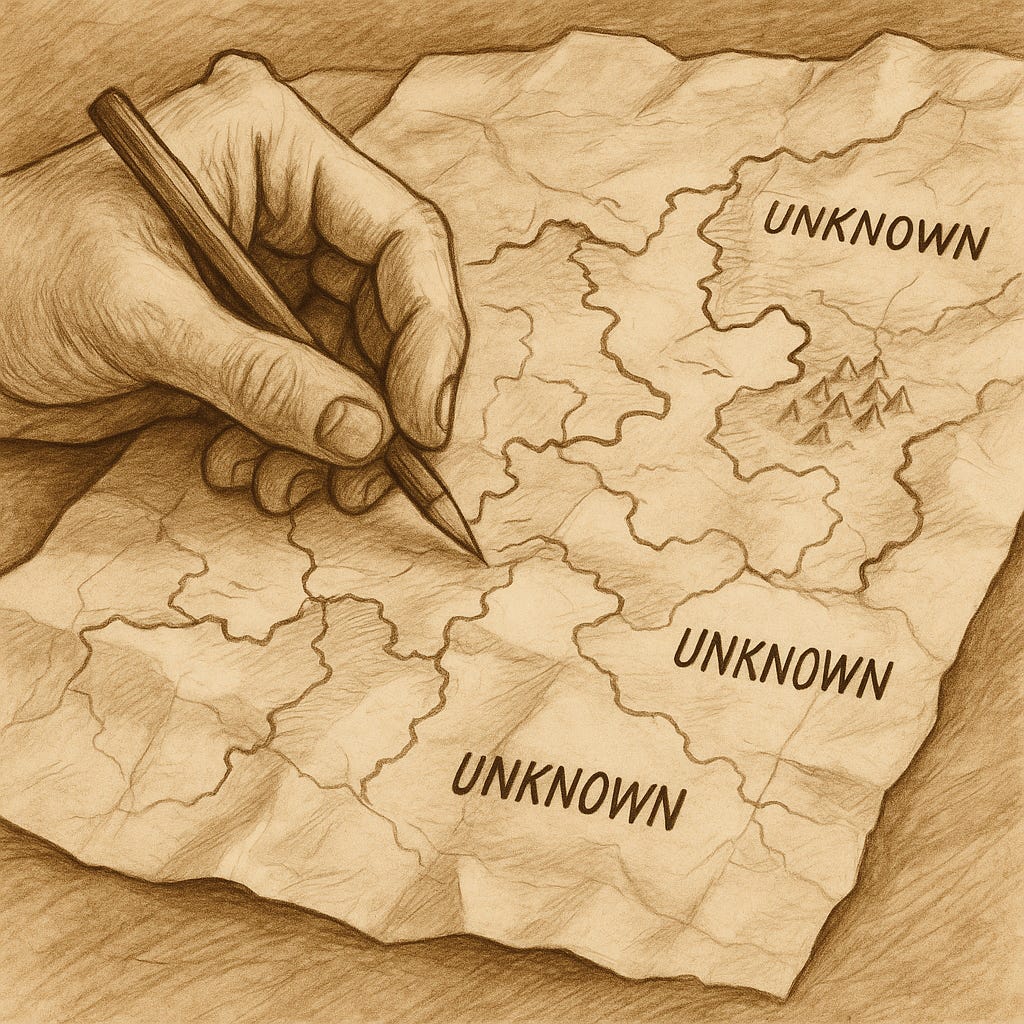
Introduction: Reasoning as Practice, Not Perfection
A Programmatic Outline
This book is a programmatic outline, not a comprehensive manual. It is designed to offer a structured guide to practical reasoning—how to reason responsibly, build coherent arguments, and recognize common failures in thinking. It makes no claim to finality or completeness. The topics covered represent a starting point, addressing core principles and typical reasoning tasks, but the subject itself is open-ended by nature and impossible to exhaust.
Reasoning is not a fixed discipline with a defined canon. It is a human activity shaped by judgment, interpretation, and experience. In simple matters—direct observation, basic decisions—reasoning can be straightforward, guided by plausibility, coherence, and empirical checks. But as problems grow more complex, reasoning becomes interpretive, narratives multiply, and certainty recedes. In such domains, argument shifts from clear-cut demonstration to persuasion, from deductive closure to the management of ambiguity.
This book focuses first on constructive reasoning: how to build plausible and coherent accounts of the world, grounded in observation and experience. It then turns to reasoning failures, outlining common patterns where arguments break down, mislead, or divert attention from reality. Throughout, the emphasis remains on practical reasoning—methods that serve in ordinary life, professional work, and public discussion.
No mechanical method or hidden formula guarantees correct reasoning. Formal logic has its place but plays a minimal role in real-world thought, where people rely on informal judgments, causal narratives, and plausibility checks. Even those trained in formal reasoning use it sparingly, often reverting to storytelling and analogy when confronted with actual problems.
Many people believe themselves to be good reasoners. In practice, reasoning well is difficult. It requires conscious effort, humility about one’s own limitations, and vigilance against the natural tendency to rationalize. There is no final authority to which one can appeal. Even the best methods produce only provisional conclusions, open to revision in the face of new information.
Nor can this outline claim to be exhaustive. There is no complete list of reasoning strategies, no definitive catalog of fallacies, and no perfect guide to judgment. Reasoning extends into every domain of human life, continuously adapting to new situations and challenges. Anyone imagining a final, all-encompassing guide to reasoning presumes a perspective available only to the omniscient. Dream on.
This book is a tool: a structured framework for thinking more clearly, reasoning more responsibly, and recognizing common reasoning failures. It promises no perfection—only improvement, rigor, and practical clarity in a world where reasoning remains indispensable but imperfect.
For practical purposes, such a textbook-length treatment must be developed in segments. A suitable method is to proceed chapter by chapter, or even section by section within chapters, ensuring:
Each segment remains self-contained and complete in exposition.
Continuity is maintained by carrying forward prior reasoning principles and examples without assumption of external context.
Each segment can focus on:
Clear exposition of principles in direct language.
Multiple concrete examples per principle.
Summary of key points for reinforcement.
A staged progression through the chapters would allow for accumulation of reasoning tools without exceeding system constraints. When ready, the starting point can be specified (e.g., Chapter 1, Section 1), and it can be developed in full text form accordingly.
Below is a segmentation of the prior outline into specific, manageable topics with formal headings. Each segment is suitable for independent development into a prose chapter section with explanations and examples.
Chapter 1: What Reasoning Is and What It Is Not
1.1 What Reasoning Does in Everyday Life
The function of reasoning in navigating the world
Distinction from instinct, habit, and intuition
1.2 Reasoning as Storytelling and Narrative
How all reasoning takes narrative form
Coherence and plausibility as practical measures of reasoning quality
1.3 Why Reasoning Is Not Formal Deduction
Rare use of deductive structure in real life
Why formal logic offers limited practical help
1.4 Dispelling Myths: No Hidden Method Guarantees Correctness
The false promise of algorithmic reasoning
Practical reasoning as judgment within constraints
Chapter 2: Grounding Reasoning in Reality
2.1 Connecting Reasoning to Direct Observation
Using sensory data and direct experience
Grounding reasoning in reality checks
2.2 Using Practical Demonstration as Confirmation
When reasoning leads to action: material feedback loops
Testing reasoning by doing
2.3 Language and Reality: The Limits of Words
How language approximates but cannot fully encode reality
Common linguistic traps to be aware of
Chapter 3: Developing Coherent Explanations
3.1 Building Internally Consistent Narratives
Avoiding contradiction in the structure of explanation
3.2 Seeking Plausible Causal Stories
Why causal accounts are more stable than loose associations
3.3 Favoring Explanatory Breadth and Simplicity
Preferring accounts that explain more with less
Avoiding needlessly complicated explanations
Chapter 4: Learning to Work with Premises
4.1 Making Premises Explicit
Bringing hidden assumptions to the surface
4.2 Testing the Grounding of Premises
Distinguishing between supported and arbitrary premises
4.3 Adjusting Premises Responsively
When to modify assumptions in light of evidence
Chapter 5: Practical Heuristics for Sound Reasoning
5.1 Using Estimation to Check Feasibility
Orders of magnitude, rough calculations
5.2 Cross-Checking Against Known Reality
Aligning claims with practical knowledge
5.3 Analogies and Comparisons in Controlled Use
Validating analogical reasoning
Recognizing the limits of analogies
Chapter 6: Testing Reasoning Without Formal Tools
6.1 Generating Simple Counterexamples
Building test cases to probe reasoning stability
6.2 Role Reversal: Testing Reasoning from Alternative Angles
Perspective shifts for internal critique
6.3 Judging Reasoning by Consequence
Practical effects as a filter for reasoning quality
Chapter 7: Reasoning in an Open System
7.1 Reasoning with Conditional Conclusions
Using if-then structures to maintain flexibility
7.2 Detecting Cognitive Entrapment Early
Recognizing when reasoning becomes self-serving
7.3 Controlled Use of Social Challenge
Engaging critical feedback without defaulting to conformity
Chapter 8: Applying Reasoning in Context
8.1 Everyday Reasoning for Ordinary Decisions
Common uses: resource management, planning, troubleshooting
8.2 Reasoning in Public Discussion and Policy
Judging claims in media, politics, and public debate
8.3 Professional Reasoning in Complex Fields
Adapting reasoning to domain-specific constraints
Chapter 9: Accepting the Limits of Reasoning
9.1 Recognizing Inescapable Uncertainty
Reasoning under conditions of partial knowledge
9.2 Knowing When Reasoning is Good Enough
Using adequacy rather than perfection as the guide
9.3 Continuous Practice as the Only Path to Improvement
Why reasoning improves through repeated, reflective use
Each of these sections can be individually developed into a full narrative treatment with examples. The chapter segmentation ensures no single section exceeds working limits while maintaining thematic coherence.
Below is a structured outline for Part II of the textbook, focused on fallacies of reasoning, organized around the premise that reasoning failures mostly arise outside of formal logic, with deductive fallacies playing a minimal role in ordinary thinking. The approach remains practical and explanatory rather than taxonomic.
Part II: Recognizing Reasoning Failure – Fallacies in Practice
Introduction: Why We Study Fallacies
Fallacies as failed or deceptive reasoning patterns, not as abstract curiosities.
Focus on understanding why reasoning fails rather than memorizing names.
Chapter 10: The Limited Role of Formal Deduction in Reasoning
10.1 Deductive Logic and Its Narrow Applicability
Formal deduction as a specialized language-game, not general reasoning.
Deductive reasoning defined by formal validity, but its narrow real-world reach.
10.2 Why Deductive Thinking is Rare
Examples of actual reasoning relying on storytelling, plausibility, and practical judgment.
Even experts rarely construct syllogisms in practice.
10.3 Validity Is Overrated: The Problem of Unsoundness
The truth of premises (soundness) matters more than formal validity.
All formal logic depends on non-deductive selection of premises.
10.4 Formal Deduction as a Tool, Not a Method of Thought
When deduction helps (clarifying internal consistency).
Why it fails to guide real-world judgment.
Chapter 11: Understanding Formal Fallacies—With Realistic Expectations
11.1 What Formal Fallacies Are and Are Not
Violation of logical form in deductive arguments.
Why most reasoning does not take this form.
11.2 The Artificiality of Formal Fallacy Examples
Why textbook illustrations misrepresent ordinary reasoning errors.
The gap between abstract examples and natural reasoning.
11.3 Why Formal Fallacies Are Difficult to Detect
Examples of counterintuitive formal fallacies.
Discussion of complexity and the limits of natural language detection.
11.4 Formal Fallacies in Practice: Rare, But Sometimes Damaging
When formal structure does matter (legal reasoning, technical fields).
Limits of applicability to practical discourse.
Chapter 12: The Real Landscape—Informal Fallacies
12.1 What Makes Informal Fallacies Dominant
Reasoning fails in content, not form.
The role of persuasion, rhetoric, and ambiguity.
12.2 Categories of Informal Fallacies as Practical Tools
Relevance-based errors: when arguments divert attention from the issue.
Ambiguity-based errors: when unclear language derails reasoning.
Presumption-based errors: when faulty assumptions corrupt conclusions.
Psychological manipulation: when rhetorical framing subverts judgment.
Chapter 13: Reasoning Errors as Storytelling Failures
13.1 Misdirected Narratives
Strawman, red herring, and misrepresentation as narrative distortions.
13.2 Implausible or Incoherent Stories
Hasty generalization, false cause, slippery slope as breakdowns in causal plausibility.
13.3 Wordplay Over Substance
Equivocation, category mistake, and reification as linguistic traps.
13.4 The Illusion of Evidence
Appeals to authority, ignorance, or emotion as substitutes for empirical reference.
Chapter 14: Fallacy Identification in Practice
14.1 The Purpose of Fallacy Awareness
Diagnosing suspect reasoning, not simply labeling errors.
14.2 When Detecting Fallacies Is Useful
As a tool for clarifying thinking, not dominating conversation.
14.3 Limits of Fallacy Hunting
Why constant fallacy spotting can mislead and foster intellectual arrogance.
Chapter 15: Reasoning Hygiene—A Practical Summary
15.1 Avoiding Reasoning Traps Without Becoming a Pedant
Maintaining focus on coherence, plausibility, and empirical grounding.
15.2 Judging Arguments by Explanatory Quality, Not Just Error Avoidance
Seeking the strongest version of an argument before dismissal.
15.3 Fallacy Awareness as Part of Judgment, Not a Replacement for It
Balancing fallacy detection with constructive reasoning.
End of Part II Summary
Correct reasoning involves building coherent, plausible, empirically grounded stories.
Fallacy detection is a secondary skill used to spot when stories are broken, incoherent, manipulative, or unjustified.
The aim is not to master obscure fallacy names but to sharpen functional judgment.